Wednesday, June 24, 2009

Prepare for the Economic Recovery with a Global Healthcare Strategy

Companies can't just focus on cutting costs...your competitors are already thinking about the next expansion.

How many times have you been exhorted to 'think out side the box.' After this 'most recent discomfort' of the economic cycle has churned through, there may be even more boxes to think about.

Vijay Govindaragan at Tuck School of Business advocates thinking about two more boxes of innovation. The first box we are all familiar with: sales margins go down, so you cut costs. This is the box that most everyone is focusing on now. The problem with this tunnel vision is that expansion always follows recession...and lasts longer and is more robust than the recession.

But the recession we are in has changed the competitive landscape - there are new winners and new losers. So during the recession is the best time to prepare for the expansion, as assets and talent are cheaper and more available.

The second box deals with two types of innovation - adjacency innovation, which is a little less risky because you are innovating in a business area adjacent to your existing core business, and breakout innovation, where you go multiple steps outside your core business. During a recession, when serious mistakes cannot be made, breakout innovations tend to ignored, even though the high risk may result in a high reward.

The third box is essentially creating your company's future in 2025. But while you may not actually plan for the year 2025, you can prepare for it.

If your executive staff is not quite ready for gaining consensus on the big, nonlinear shifts that will impact the business, why not get some practice and consider implementing an adjacency innovation in box number two?

Implementing a global healthcare option plan that co-exists with existing healthcare benefits may be one of the highest return/low risk programs for corporate HR to consider. Consider the upside potential of a relationship with premier Indian super specialty hospitals:
  • As a self insured corporation, you already have the necessary infrastructure to manage healthcare benefits
  • It is doubtful that you are conveniently located near a US center of healthcare excellence. Your employees will now have access to 'world class' medical outcomes at exceptional, high practice volume healthcare facilities.
  • Offering India as an option for a select number of very expensive orthopedic, cardiovascular, bariatric and bone marrow transplant will significantly reduce healthcare benefit costs
  • Your company's willingness to import global healthcare competition can be a wake up call for the local hospitals to reconsider their pricing models...just as global competition has forced you to do for many, many years
  • After the first employee/patient returns, word-of-mouth marketing of the experience typically drives acceptance of the program at a surprising rate.
So when the expansion does roll around, why not take some innovative steps to offer higher value, lower costs benefits than your competitors...so you can remain on the winners list.

Friday, June 05, 2009

Tort Standards Pose a Litigation Risk for Innovation in US Hospitals


Part Eight/Tort law locks US hospitals in to expensive and conventional practices and exposes potential disruptive innovators to liability. Don't expect innovation in US healthcare until negligence law is overhauled.

In addition to the burdens of having no way to fund innovation in US hospitals, there is also the ever present threat that any innovation may be labeled a deviation from the 'community standard.' This vulnerability exposes would-be innovators to liability that does not threaten incumbent providers, who abide by a strict status quo.

And amazingly, even though certain doctrines in negligence law have been known to hold providers liable when when courts find the community standard too low, no such doctrine allows providers to escape liability by arguing that a widely held community standard is too high.

US medical malpractice law penalizes innovation that cannot match the quality of the current paradigm, even if the innovation offers cost advantages and even if the innovation's quality improves over time. Initial offerings that do not meet a community standard will be deemed malpractice.

Monday, June 01, 2009

An Incredible Journey in Medical Tourism - Our Pioneering Work is Recognized in Amitabh Kant's New Book

Perseverance furthers...we join industrialist Ratan Tata in launching this outstanding publication

Amitabh Kant just published an excellent book
"Branding India - Incredible journey." India is a magnificently diverse country- with twenty-eight states, seven union territories, eighteen official languages and 1.12 billion people. In this complex and massive exercise, Amitabh Kant, former joint secretary in the ministry of tourism, and his colleagues cutting across various government departments achieved a global milestone as they put India on the World Tourism Map with their ‘Incredible India’ campaign.

Here is an excerpt highlighting my visit to India in 2007 as a guest speaker at the Indian Healthcare Summit in New Delhi:

"Paradigm Shift

In reality, there is a paradigm shift taking place and the primary healthcare doctors have only just begun to realize that there is a good quality treatment available outside the US. In these formative years, it will require professionals like Tom Keesling (founder and President of IndUShealth, USA) to act as a facilitator and catalyst. Keesling, whom I met at the Indian Health Summit in Delhi in 2007, told me that economics makes it a highly attractive option to send patients from the US to India. According to his calculation, the savings are of almost US$ 1000 per flying hour - almost US$30,000 for the thirty-hour return flying time from the US to India and back. According to him, the economics are obvious to chief financial officers (CFOs) but it is important to convince CEOs that the patients about the quality of healthcare in India being at par with the best in the US.

Keesling is recognized as a pioneer in making safe and affordable healthcare available to individuals and companies in the US. Speaking at the healthcare summit, Keesling said that more than incurring expenditure on promotion and marketing, it is essential that Indian hospitals have independent studies on medical outcomes of patients and get them regularly published in international journals to establish that they can match the world's best - Mayo and Johns Hopkins. The approach has to be similar to that of Indian hotels, which figure prominently amongst the finest in the world. Indian hospitals like Max, Escorts, Apollo and Wockhardt and Artemis (a phenomenal new hospital in Gurgaon) need to figure in the list of the best hospitals in terms of their medical performance. This will give them enhanced credibility for referral purposes. Dr Naresh Trehan, who has aggressively driven the Indian Helath Care Foundation, aims to achieve this excellence through the establishment of his Medicity in Gurgaon."

The conference that Amitabh references featured a surprise visit by His Holiness Dalai Lama that occurred just before my presentation. His quote, "...less prayer, less meditation...more actions!" has certainly been echoed in our efforts to introduce the outstanding advantages of Indian healthcare to American patients and corporations.

As I think back to the seemingly random path from Indiana, to reading the Bhagavad Gita during my study of Eastern philosophy in college, to the ten years of hospital CEO experience...and yet another chapter of healthcare reform... I find myself referring to one of my favorite quotes from Rajesh Rao, co-founder of IndUShealth,

"there is no such thing as luck, only destiny"


Saturday, May 16, 2009

Kathleen Sebelius and Healthcare's Newspeak/reducetheincrease

It's good time to revisit Orwell's 1984 as the Obama presidency begins 'healthcare overhaul'

Many of us have seen Apple's memorable '1984' Super Bowl ad and it resonates because it was probably on some required reading list during our formative years. Now that we have more years under our belts, we have a sense of unease that George Orwell's 1949 classic dystopian novel 1984 is hitting a bit too close to home.

The novel (whose original title page is shown), became famous for its portrayal of pervasive government and control, and government's increasing encroachment on the rights of the individual.
Newspeak was the fictional language in 1984.

As the Obama administration begins to take another obligatory whack at '
healthcare reform,' commentators such as Peggy Noonan observe that the deliberate obscurity of official language is intensifying our underlying fear of government.

In the May 16, 2009 WSJ she observes that the language surrounding the healthcare rhetoric of Ms. Sebelius...
"accessing affordable quality health care, "single payer plan vis-à-vis private multiparty insurers" and "key component of quality improvement" was little more the "New Class gobbledygook."

This
newspeak gobbledygook, which is more prevalent than ever, is also more destructive than ever...because government itself is doing more than ever. There are two major fears among thinking Americans right now, and the deliberate obscurity of official language is only intensifying them.

The first is that Mr.
Obama's government, in all its flurry of activism, may kill the goose that laid the golden egg. This is as dreadful and obvious a cliché as they come, but too bad, it's what people fear. They see the spending plans and tax plans, the regulation and reform hunger, the energy proposals and health-care ambitions, and they—we—wonder if the men and women doing all this, working in their separate and discrete areas, are being overseen by anyone.

The second great fear is that the balance between those who pay taxes and those who need benefits will be left, after the great flurry, all out of whack. When this balance is deeply disturbed or distorted, when the number of those who need to take from the system truly overwhelms those who work to provide America's wealth, a tipping point occurs.

Do members of the administration speak obscurely because they can't help themselves, or do they speak the way they speak because they really aren't all that keen to have people understand them?

Wonder what
newspeak term Big Brother would have for euro-style socialized medicine?

plusgoodhealthjoy

...now
don't we feel better...


Wednesday, May 13, 2009

If Mount Olympus Was Subject to Medicare DRG Reimbursement, Would Zeus Have Been So Innovative With Eternal Damnation?

Part Seven/The Deck is Stacked Against Organizational Innovators in the US...there is simply no way to get paid for the innovation.

Sisyphus was a clever fellow, and he thought himself as clever as the gods. Zeus, however, was a god, and displayed his own cleverness by binding Sisyphus to an eternity of frustration. Today, pointless or interminable activities are often described as Sisyphean.

Few tasks can be more interminably frustrating then trying to get a hospital paid for a service. Rather than receiving a payment appropriate for a given service and the costs associated with it, the diagnosis-related group (DRG) payment system forces innovators to find an appropriate rate from an existing DRG.

The shackling of innovation by the DRG system has several consequences for the US hospital innovator:
  • The DRG system restrains price competition by sustaining overly compensated but inefficient incumbents and dilutes any cost advantage brought by innovation.
  • The lengthy and cumbersome procedures to establish new DRGs can discourage innovators with new business from entry because they will not be provided with appropriate reimbursement.
  • US hospitals cannot price flexibly, as Indian hospitals do, and have no incentive to find price points that are appropriate for different market segments.
  • There is no means to negotiate with the Centers for Medicare and Medicaid Services (CMS) to secure reimbursement for innovative procedures or business models.
Private insurance reimbursement also impedes price competition, because the insurers have difficulty negotiating with the large hospitals that have market power. Insurance networks are forced to include all of the clustered services that a hospital chain offers...including those services that would normally be targeted by a more efficient entrant.

It comes as no surprise that with all this insurance comes an enormous administrative burden. While the US patient sees Case Managers whose primary focus is to arrange for insurance reimbursement and getting them out of the hospital as fast as possible, the Indian patient is being attended to by support personnel from the nation's hospitality industry...who are dedicated to improving the patients comfort and satisfaction.

Monday, May 11, 2009

Abandon All Hope Ye Who Believe that Indian-Style Innovation Can Easily Be Adopted in the US

Part Six/Specialty hospitals in the US do not appear to compete on either price or quality

It is almost as if Dante and Gustave Dore were divinely inspired to provide generations of US healthcare commentators with a rich source of visual illustrations to supplement the topic at hand.

Just as with the boat ride with Charon across the river Styx, the American patient must pay to navigate the complex healthcare system. But unlike Charon who seemed quite reliable, patients sometimes have no idea of what they are really paying for.

The only reasonable comparison between a US and Indian hospital is perhaps India's new specialty heart hospitals and US specialty hospitals.

In the US, specialty hospitals promised to deliver a higher quality healthcare at a lower cost than local general hospitals by specializing in specific offerings and capabilities, producing a higher volume of service and reducing costs.

The actual achievements of these US specialty hospitals is mixed, and an assessment of their operations reveals the basis upon which hospitals really compete in the US. First, the quality of care is in dispute. The higher margins and lower costs were essentially driven by "cream-skimmed" patients who offered the most lucrative procedures and fewest complications. The Medicare Payment Advisory Commission (MedPAC) found that 94% of these specialty hospitals were located in states without certificate of need requirements. The financial success was not as result of efficiency, but exploiting hospital reimbursement policies.

Since payment to hospitals in the US is not based on quality or clinical outcomes, the US specialty hospital's business models seems to be not much more than careful patient selection. In fact, MedPAC and the US Department of Health and Human Services (HHS) concluded that there is little evidence that an efficiency-based business model was ever developed.

So, it appears that US specialty hospitals evolved to take advantage of financial loopholes within the payment system, rather than to exploit an opportunity for high quality and lower cost. It seems that the US regulatory environment has had the effect of actually discouraging value-based competition and throttled the organizational innovation that is now shaping the Indian market.

Wednesday, May 06, 2009

Reverse Engineering Jobs to Lower Costs Yet Maintain Quality

Part Five/US Hospitals can't easily reduce their personnel costs...Indian hospitals already have

There are literally hundreds of healthcare professional societies in the US. There are hospital associations and societies for every imaginable job type. They all have various certifications and annual meetings and accreditations which seem to become inexorably woven into the human resource job descriptions over time.

When you diligently work at creating standards that require the most expensive human resource cost inputs for a given task...under the wildly waving banner of quality care ...you end up with some very expensive procedures. In the US, these costs are passed on year after year as reasonable and customary.

In India, where there is negligible market penetration by insurance carriers, patients are payers are better able to shop for medical procedures by comparing prices. In this true healthcare market, there is a continuous drive for maintaining quality and lower costs. To this end, hospitals have adopted the strategy of "de-skilling."

De-skilling is the mirror image of the US healthcare labor strategy. Every procedural function is reverse engineered, to determine the lowest level of training needed for a given task. De-skilling not only cuts costs by substituting lower-cost labor when possible, but it also addresses local labor shortages in skilled and trained personnel.

This is yet another cost saving strategy that would be nearly impossible to adopt in the US, as any gains realized would be wiped out with the very first law suit alleging failure to provide the prevailing standard of personnel for a task.

Monday, April 27, 2009

Differential Pricing Strategies are Impossible if the Customer Can't Determine the Cost of a Service

Part Four/ Can any patient find the advertised final price of any cardiovascular or orthopedic surgery in America?

I remember responding to an opportunity in Michigan to provide clinical laboratory services for non-time critical tests at the very capable ACP accredited Clinigene lab in Bangalore. Even with recruiting the services of an insurance carrier to help decipher the bills, it was literally impossible to determine the price of an individual test. While we were easily able to price our services...we could not determine the savings because the customer could only provide a quarterly billing statements.

Every community seems to have a newsworthy story about a local who ended up with an astronomical full charge bill from the hospital that has turned over the account to an aggressive bill collection agency and is forced to declare bankruptcy.

Of course, if you are Amish, and the elders shell out over $5 million per year for your religious community's health care, you might be able to deal with the local hospital for a discount against these full charges.

The core issue is that the US healthcare consumer is shielded from the price of any procedure, as well as any information on quality that could be used to measure value. The only valid explanation for this in a free capitalistic society is that a monopoly has been created and consumers are either forced or tricked in to buying the service.

This is in stark contrast to the Indian healthcare delivery model that has adopted the practice of price discrimination (differential pricing) to target multiple segments of the Indian population. Tiered pricing allows for the provision of standard services, and also the charging of higher fees for comparable services to higher-income segments of the patient base.

This differential pricing allows the organization to provide services with minimal margins or below full cost (but above variable costs) to about 75% of the patients. There is an explicit focus on limiting fixed costs to achieve budgetary goals while maintaining quality...so price discrimination occurs primarily on capital costs and less on technology and services. Indian patients can choose to pay more to enjoy five star amenities...but the technologies used for procedures are the same for all patients.

The posh rooms allocated to IndUShealth for the international medical tourism patient are a key part of the differential pricing strategy...so every patient in the hospital can access the latest technologies.

So the Indian hospital strategy enables the the hospitals to maintain high volume and low overhead costs. These high volumes also allow healthcare professionals to keep their skills at peak levels.

Meanwhile, US hospitals were busy with $35 billion in construction projects in 2008, generally going towards entirely private rooms, with high end Hill Rom beds. The only selection available to the consumer is the five-star accommodation, and those most able to afford it are given the highest discount on the rates. Those that cant afford (and have no intention of paying for) the service are generally given carte blanche access to the premium services.

And the unlucky minority who have just enough resources to be a target for the hospital's collections agency pay the inflated accounting fiction called "the full charge."

There is simply no financial mechanism available for the US hospital to compete with their Indian counterparts via price discrimination.


American College of Surgeons Releases Statement of Support for Medical Tourism

IndUShealth standard business practices are unerringly aligned with ACS Position statements

These encouraging statements were developed by the Committee on Perioperitve Care and approved by the Board of Regents at its February 2009 meeting:

"The ACS encourages patients to seek care of the highest quality and supports their rights to select surgeons and health care institutions without restriction."
"The ACS encourages its Fellows to assist all patients in reaching informed decisions concerning medical are, whether at home or abroad."

The anticipated caveats in this statement are just as important, as the ACS is not suggesting US patients book passage without careful consideration. It is interesting to note that IndUShealth anticipated each of the concerns now expressed by the ACS early in the business planning stages of the company. These caveats are:

  1. Make sure you understand the laws of the country and have legal recourse in case there is liability for an injury.
  2. Choose hospitals that have met the standards of the US Joint Commission.
  3. Seek care from surgeons who are certified in their specialties through a process equivalent to those established by the member boards of the American Board of Medical Specialties
  4. Obtain a complete set of medical records prior to returning home and coordinate follow-up care prior to travel.
  5. Understand the risks of international flights with anesthesia and surgical procedures.
The ACS is essentially stating that when a US patient feels the real or perceived need to seek surgery outside the US, that the Fellows of the ACS should be supportive. However, it is probably unreasonable for the US patient or corporate healthcare benefits executive to anticipate that the US surgeon should provide the necessary peer review, case planning, medical records and follow up coordination required for medical/surgical tourism.

Rather than taking a protectionist stance on medical/surgical tourism, I believe that a hospital and surgical staff could establish a network for international patient support. Providing access to lower cost options with an Indian hospital partner would seem to be an innovative strategy to create superior competitive advantage.

Saturday, April 25, 2009

Managing Hospitals Designed to Compete on Quality and Cost

Part Three/Fragmenting care to optimize reimbursement does not generally enhance the customer/patient experience

The growth of India's consumer market is worthy of careful study, such as can be found in McKinsey & Company's Bird of Gold report. In general the Indian middle class is currently about the size of the entire US population, and will grow to 583 million by 2025. Indian hospitals have targeted the healthcare needs and budget of this sector. They have focused on high-demand services, such as cardiovascular surgery, and built a large capacity to provide high quality service at an affordable cost. The organizational innovations that keep these costs competitive in India are also quite attractive to the US purchaser of healthcare services.

This is a much different approach than the US
healthcare system, where the byzantine reimbursement schemes require hospitals to vacillate between mutually exclusive goals of healthcare being a right, or a privilege. Healthcare is sometimes a right when two heart lung transplants are performed on an illegal immigrant, and sometimes a privilege when hospitals begin to collect the charges for a procedure that a patient had no way of finding out what it was going to cost.

The Indian hospitals recruit managers with complementary experience in the hotel industry, so patient care can be managed in the context of the customer's experiences and expectations. In contrast, the US hospital is built around the financial models required to maximize reimbursement for services...which many times bear little resemblance to what is necessary for the practice of medicine.

The result of the customer approach is that when an IndUShealth patient visits an Indian hospital, they are completely surprised by the level of personalized care, in contrast to their previous US hospital experiences.

Friday, April 24, 2009

Disruptive Innovation Requires New Entrants

Part Two

Early in the formation of IndUShealth, we were contacted by Clay Christensen of Harvard Business School to explore the dynamics of how our new model of global healthcare/medical tourism may be serving as a catalyst for disruptive innovation for the US healthcare system.

As explained in his popular The Innovators Dilemma, the disruptive innovation theory is that innovation-intensive industries regularly undergo major changes and cycling of industry leadership. New entrants challenge industry leaders with low-cost technologies to achieve better performance, and force the incumbents to undergo organizational change.

The US healthcare system has been remarkably resistant to innovation, with the same industry leaders from a generation ago in generally the same, moribund position. Disruptive innovation requires new entrants, and the US healthcare market has managed to neutralize challenges presented by any newcomers.

Rather than focus on any frustrating attempts to try and integrate the innovations from Indian hospitals in to the US healthcare system, it seemed much easier to extract the US patient from the inefficient high cost system and place them in an environment where they are welcome.

Patients who are motivated by pain and financial distress routinely think outside the US healthcare box...and are rewarded with superior healthcare value in India.

Thursday, April 23, 2009

An Analysis of Organizational Innovation in Indian Hospitals: why they can deliver the best medical tourism value in the world

Part One

Once again, another President begins the process of 'reforming' the US healthcare system. This drama has played out over and over again for decades...with healthcare emerging as an enormous drain on current American productivity. Swaddled in the protective monopoly of the medical industrial complex, innovation from the US healthcare system has stagnated and costs have soared.

Do we remember the amusement shown for the first six Honda employees that opened shop in Los Angeles in 1959? Honda is now the largest engine manufacture in the world and has surpassed Chrysler in vehicle sales here in the US.

Seeing that the healthcare industry has generally adopted the assembly line methods of Henry Ford, it is not much of a stretch to imagine the parallel destinies of industries who have internalized the belief that they have no global competitive threats.

For the first time, the US healthcare system is now faced with global competition.

And while the headlines read "US-trained physician performs $100,000 heart surgery for $16,000 in New Delhi," there are few details as to how these hospitals provide the highest medical outcomes for the lowest cost in the world.

In their excellent report Lessons From India in Organizational Innovation: A Tale of Two Heart Hospitals, Barak D. Richman, Krishna Udayakumar, Will Mitchell and Kevin Schulman published in Health Affairs, Vol. 27, Nov. 5, 2008 use the examples of two IndUShealth network hospitals, Fortis Hospitals in New Delhi and Narayana Hrudayalaya Heart Hospital in Bangalore, to highlight the divergent trajectories of innovation between the US and India.

There is a lot more going on here than low labor costs. I would like to highlight these textbook examples of innovation throughout the following posts, and explore why they can't be duplicated in the US.

Wednesday, April 22, 2009

Wockhardt Raises the Bar for Surprise and Delight for the Medical Tourism Patient and Family

I have enjoyed the personal satisfaction of watching hundreds of patients leave the United States in physical pain and financial worry, and returning from our partner hospitals in India having benefited from an extraordinary medical and personal experience . As a former hospital CEO, I have marveled at how quickly the Indian healthcare system has evolved...and wondered if the US system could ever provide the same value if we could magically remove third party payers, and the other unique burdens of capitalism.

Beyond the new facilities, 128 slice CT scanners and the latest healthcare technologies, I am continually surprised by how the very simple act of listening to patients can provide unexpectedly positive returns.

The husband of one of our patients took the occasion of her cervical disc replacement visit to Bangalore to join his wife for the trip of a life time. While at the Wockhardt hospital, the staff learned that they were celebrating their wedding anniversary. Unbeknownst to the patient and her husband, the hospital team took the occasion of a previously arranged tour of the city to treat them to a surprise wedding anniversary dinner at a local restaurant...complete with music and chocolate cake.

On the surface, this seems like yet another example of one of India's premier super specialty hospitals moving the customer experience up yet another notch. But we also find that there is an important surgical recovery benefit to these surprise outings.

The Indian surgeon has a much different post-surgical goal than his US counterpart. In the US, the patient only needs to be ready for discharge from the hospital...in India, the patient must be ready for the journey back home. So Indian post-surgical physical therapy is immediate and continuous right from the surgery. Because patients are up and walking so quickly, they sometimes over estimate their abilities to transition back to normal physical activities. Sometimes a visit to the market, or a surprise wedding anniversary dinner, is all that is needed to reset the patient expectations for activities to be more in line with their physician's recommendations.

The end result of these efforts is an extraordinary healthcare experience that simply cannot be duplicated in the US.

Sunday, April 12, 2009

Drug War Casts Shadow on Mexico as a Viable Medical Tourism Destination for Americans

When George Tenet, former CIA director urges his college-age son to cancel a spring-break trip to Acapulco, you know its time pay attention to the inherent risks of Mexican travel. Candace Jackson of the WSJ did a great job in her April 10, 2009 article describing the impact not only on tourism (20% of the tourist related businesses have closed in Tijuana) but also on business travel.

With an estimated 6,000 people killed last year, I think it is fair to say that this is a full scale war between the drug cartels and the Mexican government. Because of the corruption inherent in the local police forces, the Mexican military has been deployed to maintain control, especially in the border cities. Seeing the military deployed does not make for a relaxing atmosphere, regardless of the concentration of palm trees.

While most of the beheadings, kidnappings and torture is concentrated along the US border, travel in Mexico is of sufficient concern for a host of US colleges to send email to their students with a link to the US Department of State Travel Alert, and warn them not to travel to Mexico for spring break.

When Medical Tourism first emerged as a possible alternative to certain challenges in the US healthcare system, Mexico was touted as a viable option to the long flights required of other continents. The model, it seems, was to set up 'US-style' hospitals in Mexico, at a much lower cost...much as US manufactures did to access lower wages and costs of regulation.

While the actual seaside resorts may have escaped much of the drug war violence thus far, there is still the issue of how to access these comparatively safe areas directly from the US.

This concept of near-shoring in Mexico may emerge again should travel risks of the drug war subside.

Friday, April 10, 2009

Medical Tourism Outlook/Boeing Projects 1,000 Airliners worth $105B for India

Since we first began to formulate our initial business strategies for IndUShealth in 2006, we have kept a close eye on global airliner deliveries as a good indicator of economic activity around the world. Reuter's Sumeet Chaterjee did a great job of highlighting India's aerospace trends in his article Boeing to deliver $17 bln of planes to India in 5 yrs.

It was interesting to note that Boeing had not seen any reduction of orders from the airlines of India, Asia's third largest economy. As we are treated to a never ending litany of grim economic news here in the US, it is comforting to note that 50 airlines are eagerly awaiting 892 Boeing 787s.

While it is getting more expensive and time consuming to get from Raleigh to Moline, global air travel continues to expand...should you doubt this, here is a video of every airliner flight in a 24 hour period...compressed to 70 seconds.

We chose to concentrate on India for a variety of medical and business reasons. Cost effective global air travel is critical to our business model. Even during the most recent surge in jet fuel costs, we saw only a modest increase in US-India ticket prices. Currently, we are seeing special sub-thousand dollar direct flight fares return.

Of course, it is also comforting to be in the good company of 44% of the US Fortune 100 corporations that have already established operations in India.


Saturday, October 14, 2006

Can Medical Tourism Reduce Real and Perceived Malpractice Risk for US Corporations?

I have spoken to scores of physicians, corporations both Fortune size and small, insurance carriers, TPAs, benefits consultants, Governors and legislators on the topic of medical tourism. The underlying theme is that global healthcare is inevitable, desirable, and that new business models need to be created to enable US patients to take full advantage of the emerging opportunities.

What is interesting, is that the very first question is typically "this is really great, I hadn't even imagined this was an option...so how do I sue?"

It is truly amazing how completely intertwined that healthcare and malpractice have become in our collective psyche. But is it also paralyzing us in our ability to make rational decisions regarding healthcare in other countries? Are we making the assumptions that healthcare in another country is just like ours, only less expensive?

Lets examine some of these deep seated fears that have become all part of the US hospital experience, and contrast them to our patient's experiences in India:
  1. Lack of communication
  2. Medical outcomes
  3. Perverse financial incentives
  4. Lottery-sized awards for pain and suffering when there was no medical malpractice
Lack of Communication

Maybe its just me, but I haven't met anyone that really looks forward to a visit to the hospital. We all know that this is a time of great stress for the individual, including the health condition in question and the unknown financial impact of the visit. There are all manner of risk management procedures to address a problem after it arises in a hospital, but typically little effort is invested in addressing problems in real time.

Contrast the typical introduction to the US hospital with a global health option:
  • The prospective patient is immediately in contact with an RN Case manager who begins to understand their medical need, and starts to identify options within our Hospital Partner Network
  • Every question the patient asks is answered, typically involving a collaboration between the RN Case Managers, our Medical Director and attending Physician in India
  • This experience may also be the first time a patient has traveled internationally, or the realization of a life long dream. In any case, there is the aspect of adventure, with all the attendant travel issues that must be addressed in concert with the medical issues.
  • Patients are issued a pre-programmed cell phone, that allows instant contact with the RN Case Manager, and family back home. If there is situation where there is question or unmet need that is not addressed, we are typically able to contact our colleagues at the Indian hospital and address the issue with far greater speed than in the US.
So what might have started out as a small issue...cold food, delayed pain meds, cancelled doctor visit, IV running out, beeping monitors...begin to multiply and are amplified as the hospital stay progresses.

Medical Outcomes

While there are all manner of standard patient forms that a US patient signs to prove he has read the various complications, we all know that not all of the fine print sinks in. The patient is counting on the doctor to do his best job. The only bargaining chip that many patients feel they have is the shield of lawsuit threat. So the the doctor makes nearly every medical decision for the patient haunted by the specter of litigation, and the patient has a malpractice attorney loaded in the cell phone.

A patient that has a good medical result, a good experience and feels they received good value for the money can seem to be quite the exception in the US.

  • The hospitals that are typically involved with international medicine are not really comparable to the typical local hospital that most patients find themselves exposed. The hospitals in our network are chosen for their international reputation for consistently high medical outcomes.
  • Each US patients represents yet another opportunity to showcase India's medical prowess, and they know that the details of each experience will not only be shared with countless friends upon the patient's return back to the US, but may also appear in countless newspapers across the globe.
  • Indian cardiovascular surgeons at our super specialty hospitals typically will have operated on as many cases as a US surgeon has upon retirement, by the time they are 40. This seems to be driven by several factors. Not only is their a vast difference in population of the two countries, but in contrast to the US where cities may have several competing heart centers for a limited number of cases, there is a concentration of heart centers that attract the best surgeons.
  • So instead of a heart center doing hundreds of cases a year...India centers do thousands.
If you take a look at medical outcomes data, the argument can be made that patient may be exposed to a higher risk of complications at the US hospital.

Perverse Financial Incentives

Because of the US healthcare reimbursement system, the hospital has a financial incentive upon the patient admission to get the DRG up on the scoreboard, spend as little as possible in addressing the medical condition that the DRG encompasses, then discharging the patient as quickly as possible. All in hopes of receiving payment at some point in the future. Patients seem to be discharged mid-procedure, many times with wires, hoses and beeping devices still attached, requiring the family to help coordinate home health visits...and on it goes.

Leemore S. Dafny has a great paper (sidebar) Games Hospitals Play: Entry Deterrence in Hospital Procedures Market. And what is surprising conclusion?

"These findings suggest that competitive motivations play a role in treatment decisions."
Ok, not a surprise...and there are countless other citations showing the links between financial incentives and hospital/medical decisions directly affecting the patient.

The discussion of whether this is good or bad thing certainly deserves its own post.

  • The hospital in India has already been paid before a patient even arrives. That's right...payment up front. But the healthcare team has much different goal in mind than their US counterparts. The procedure must be done, with an excellent result, and then recovered to a point whereby the patient can enjoy the plane trip back to the US.
    Can you imagine what our US healthcare system would look like if every third party reimbursement system was replaced with cash over night, and every discharged patient had to recuperate in the hospital or resort until they were able to fly to India?
  • Of course, there are only a certain number of procedures that lend themselves to this model...which interestingly mirror some the most expensive and profitable procedures here in the US. So when we hear the consultants divine the future impact of the medical tourism market, makes sure to listen carefully if they are distinguishing between number of procedures or financial impact to the individual and corporation.
Lottery sized awards

One need go no further than to review the career of former US Senator John Edwards to get idea of how far we have let the system get out of hand. And while the likelihood of a patient or family collecting from the medical lottery is quite remote, a US patient does seem to feel a sense of unease that they do not have their only protective shield when they travel overseas.
  • While the fact remains that a patient would need to bring litigation against an Indian hospital or physician in an Indian court...
    We are at this time, unable to identify a malpractice claim against an Indian hospital or Indian physician by a US patient.
  • Of course, if US patients were followed by news camera crews from the BBC or ABC from patient arrival at the airport to discharge, there might be more similar outcomes.
We need to keep in perspective, that for every $1 million that a lawer puts in his pocket, 70 children could have had heart surgery in India. Its up to America to decide if the system that trades 2,800 pediatric heart surgeries for a trial lawyer's largess is fair.

-----

In summary then, while there are some topics that need to be researched in the normal course of due diligence, very strong arguments can not only be made for the US patient enjoying a reduced malpractice risk in India, but that corporations could more fully discharge their fiduciary duties by assuring their employess are aware a less risky global healthcare option.

Thursday, October 12, 2006

$2 Trillion Fiscal Hole Requires a Mighty Shovel

Addressing the healthcare needs of individuals and corporations is challenging enough. But the new Governmental Accounting Standards Board rule will kick in next year to reveal underfunded...or over promised...retiree health benefits will cost $1.4 trillion.

This number is a bit too large to comprehend, so lets take New Jersey as an example given by Chris Edwards and Jagadeesh Gokhale. The Garden State's unfunded obligations in its retiree health plan now stand at $20 billion, and the overall costs of the health plan are expected to grow at a rate of 18% annually for the next four years.

Out of 15.9 million state and local workers, 65% are covered under retirement health plans, compared to 24% of workers in large firms in the private sector.

So what are the options available to state politicians as their federal colleagues struggle to finance massive shortfalls in Social Security and Medicare?

Based on our early analysis of state data, and assuming a 20% utilization rate by state and local workers of our global healthcare option program for only seven surgical procedures, state politicians could expect to generate $928 million in savings nationally for the 15.9 million state and local workers.

Conceivably, we could also contribute $2.4 billion nationally for potential savings in state Medicaid programs.

So while $3.3 billion in state retiree and Medicaid healthcare savings might not address the entire issue, one might expect that anyone willing grab a shovel of any size would be welcome.

Wednesday, October 11, 2006

Why Half Way Around the World is Closer Than You Think

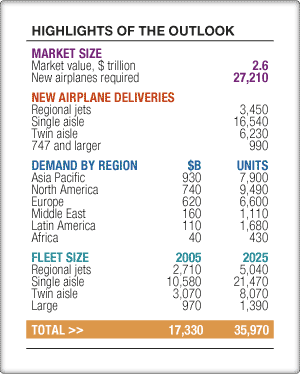
It is important to understand that demand for air transport will be driven by global economic growth which will, in turn, contribute to that growth. The need to expand the existing fleet to meet growing demand, plus the need to replace older airplanes with new, better ones, creates a market for 27,210 new airplanes worth $2.6 trillion to be delivered over the next twenty years.

Boeing and their planes have an extraordinary history and have played an integral role in defining America's position in the world. They have made some extraordinary business decisions, such as betting the
company on the 747...and outmaneuvering Airbus with the development of the Dreamliner.

Beyond the ability to create one of the foremost manufacturing capabilities in the world, they have also developed a reputation for very accurate market forecasts (see sidebar). So when Boeing forecasts that demand for airliners from the Asia Pacific region will be greater than North America or Europe, one should take comfort that the numbers are reasonably accurate.

We are entering an age of global air travel where it will be just as easy to fly to New Delhi from Chicago as it is from Raleigh to Moline.

Utopian Characteristics of the Ideal Medical Tourism Destination

There are beautiful places in every country all over the world. Who has not turned the pages of National Geographic and longed to travel to the featured locations? Because of the way the world is laid out and owing to how civilization has populated the continents, the beautiful places...beaches, mountains, forests...are typically not easy to get to. So various levels of lodging adjacent to the beautiful places has sprouted up over time.

Now enter the rapidly growing trends of plastic surgery. Certainly not limited to the popular vanities of America, men and women all over the world seek to not only turn back the sands of time, but reverse the lifelong effects of gravity.

Revealing one's new exterior overhaul to the world the day after surgery truly diminishes the desired effect...so wouldn't it be better to go on a vacation and then return to display the improvements with optimal visual impact?

So where should a bruised and bandaged face or tummy go for a week...Dayton Ohio? Or somewhere with beaches, temples or waterfalls? And when enterprising physicians began to practice near these beautiful places, the Medical Tourism industry was born.

Going to a beautiful place, having a nip here and tuck there in the company of drinks with little umbrellas in the shade of the palms, buoyed by the growing anticipation of reveling in the envy of friends back home does have its attractions.

But what if you or a family member is confronted with the need for a more serious and complicated surgery or procedure? What if you are a corporation seeking a cost effective option for your existing health benefits? Where is the Medical Tourism Shangri-La?

My ideal checklist would include:
  1. The medical outcomes of the physician and hospital would be equal to or better than available to me in the US for my procedure.
  2. There would be a dramatic cost savings
  3. The hospital and physician would meet the same level of quality and service accreditation as hospitals and physicians in the US
  4. Recognition of medical excellence by affiliation with internationally recognized US hospitals
  5. Support by the country's government for developing a medical tourism industry
  6. Proof that the physicians graduated by that country's medical schools are well represented in the American Medical Association
  7. English is spoken by all my caregivers at the hospital
  8. The availability of immediate communications with the US
  9. A wide array of beautiful places to visit
  10. A stable government
  11. A modern travel infrastructure that is easy to navigate
Of course, Shangri-La does not really exist. So of the eleven characteristics, which ones might you be willing to do without?

Edgar Allen Poe Describes the American Healthcare System

Unless you have personally experienced the agony of a healthcare crisis compounded by financial concerns, it is truly difficult to fully appreciate. David Himmelstein observed in his 2005 Health Affairs article that 1.9-2.2 million Americans experienced medical bankruptcy in 2001...and a striking 75% had insurance at the onset of the illness. It is hard to imagine that anyone would believe that these numbers have not increased dramatically since the 2001 study.

If you are a decision maker that is considering the merits of a Medical Tourism option for individuals, whether a corporation or branch of government, I recommend that you take a few moments and read Poe's 1843 short story entitled The Pit and Pendulum.

While I will leave it to the reader's imagination as to which parts of the healthcare system most closely match the options available to the narrator of the story, I would like to believe that the emerging Medical Tourism industry is playing the role of General Lassale.

Tuesday, October 10, 2006

Why Are So Many Americans Uninsured?

How does one go about explaining how the most expensive healthcare system in the world leaves about 18% of its population without the economic and psychological benefits of insurance coverage? Perhaps the most succinct analysis is found in Uwe E. Reihnardt's review (see sidebar) . The major points are:
  1. The phenomenon of the uninsured is an inevitable by product of our employment-based health insurance system.
  2. The nation has not seriously addressed the problem - and it is not likely to any time soon because the uninsured represent a politically and economically marginalized socio-economic class with no leverage in the commercial marketplace.
  3. The public's distaste for bold policy initiatives leaves incremental reform as the only practical alternative, which typically results in chronic policy paralysis.
  4. Although the incremental costs of rendering charitable care are picked up by the insured through various hidden cross subsidies, it is a bargain for insured Americans, because the uninsured receive only a fraction of the healthcare that insured Americans get.
Dr. Reinhardt's fifth point is perhaps the most interesting...
"We are embarking upon yet another round of studies, policy conferences andCongressional hearings on the problem of the uninsured. Although this activity may be perceived as "action," it can be doubted that much more than new bodycounts of the uninsured and some rehashed old proposals will come of the effort."
This quote appeared in the Spring of 2001, when the number of uninsured stood at 40 million.

The 2005 number stands at 46.6 million and will likely top 48 million in 2006.

So where do we find the healthcare system today?

As uncomfortable as the idea may be, America is essentially rationing healthcare coverage by income class. We may never have universal coverage, because that requires cross subsidies from the haves to the have-nots. Through our collective inaction, we are allowing a four tier system to be cemented in place:
  1. For the uninsured, whatever they can obtain in the role of healthcare beggars (often zip)
  2. For Medicaid recipients and low-wage earners in business firms that do offer health insurance, tightly managed HMOs with cost-conscious gate keepers, and if need be, yesterday's technology.
  3. For middle and upper-middle income classes, PPOs with varying degrees of restrictions and costs sharing.
  4. For high-income families...the traditional open ended, completely non-rationed fee-for-service system
And of course, Medicare beneficiaries are being distributed among the upper three tiers.

I forecast that the public debate on the uninsured will increase as the number approaches the 50 million mark, perhaps during the runup to the 2008 Presidential elections. And if recent history is any guide, what do you believe will change?

I think America can do better. So if we want to help those who are marginalized by and disenfranchised from the American healthcare system, what can be done?

Monday, October 09, 2006

An Industry by Any Other Name

Many Americans seem to believe that "Medical Tourism" is a recent phenomenon. And while the soaring costs of healthcare in the US have highlighted the motivations and experience of these early "pioneers," personal travel to centers of medical excellence spans thousands of years.

Depending on where one grew up in America, history commonly began at 1492, 1776, the Alamo in 1836 or upon the firing at Fort Sumpter in 1861.

Perhaps it is the relative newness of our country that leads us to be so surprised that countries such as India could have a 6,000 year head start in the practice of medicine.

Travel agencies have been helping to arrange vacations for patrons of excellent plastic surgeons in exotic locations throughout the world for many years. But with the soaring costs of healthcare, US patients have been seeking increasingly more complicated and expensive surgeries overseas. While the term of "Medical Tourism" doesn't quite do justice to the myriad of components that define the industry, thanks to Google, it is probably going to be with us for a long time.